




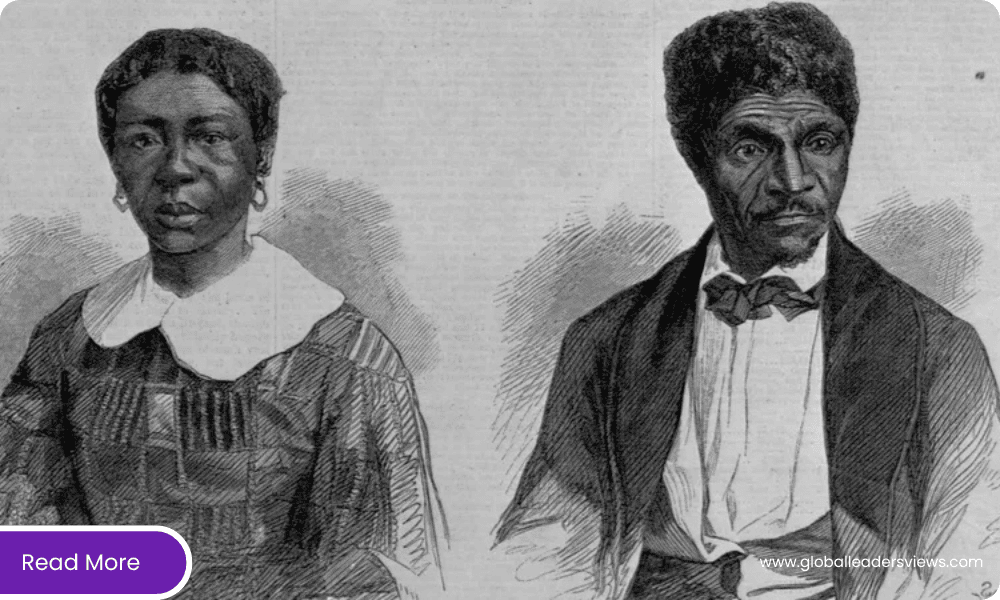
In 1846, Dred Scott Case, a Black man who was owned, and his wife, Harriet, made a daring move toward freedom by bringing a case in St. Louis Circuit Court. Their appeal was straightforward: they maintained that because they had lived for an extended period of time in a free country where slavery was prohibited, they should be legally free. The Scotts lived with their enslaver, an army surgeon, at Fort Snelling in the free territory of Wisconsin, which strengthened their case.
Their lawsuit looked to be simple and precedent-based, as courts had previously ruled in favor of enslaved individuals living in free territory. However, what appeared to be a private legal case grew into a serious national discussion about the constitutionality of slavery. After years of court battles in Missouri and federal courts, the issue eventually reached the United States Supreme Court, becoming one of the most contentious judicial rulings in American history.
Dred Scott Case: A Defining Moment in US Legal History
By the time the case arrived at the Supreme Court in 1857, the country was bitterly divided on slavery. The decision, delivered by Chief Justice Roger B. Taney, dealt a crushing blow to abolitionists and Black Americans. The majority ruling stated that enslaved individuals were not citizens and thus had no standing to suit in federal court. In addition, it claimed that Congress lacked the authority to ban slavery in federal areas.
By the time the case reached the Supreme Court in 1857, the country was deeply divided over slavery. The ruling, delivered by Chief Justice Roger B. Taney, was a crushing blow to abolitionists and Black Americans. The majority opinion stated that enslaved people were not citizens and hence lacked standing to sue in federal court. Furthermore, it argued that Congress lacked the jurisdiction to prohibit slavery in federal lands.
Reexamining the Dred Scott decision in 2026 offers crucial insights for today’s law leaders and policymakers. Understanding this case helps highlight the importance of constitutional protections, the perils of judicial overreach, and the long fight for civil rights.
The Supreme Court’s ruling, later overturned by the 13th and 14th Amendments, serves as a sobering reminder of how legal interpretations can shape—and sometimes distort justice and equality. Revisiting this history emphasizes the ongoing responsibility of courts to uphold human dignity and constitutional values.
As legal debates continue worldwide on civil rights and freedoms, the Dred Scott case remains a critical reference point. Its legacy underscores the need for vigilance in protecting rights and combating discrimination under the law.
Also read: Trump’s Legal Battles
In conclusion, the Dred Scott case is not just a historical footnote but a continuing lesson for law leaders and society. Reflecting on its impact in 2026 helps reinforce the principles of justice and equality that remain essential to America’s legal and moral foundation.
Reexamining History: The 2026 Dred Scott Case
One of the most important decisions in American history, the Dred Scott Supreme Court judgment from 1857 continues to influence discussions about justice, rights, and citizenship. Examining this case again in 2026 provides a chance to consider how far legal systems have come and how contemporary society is still struggling with issues of civil rights, equality, and judicial accountability.
Insights for Contemporary Legal Frameworks
Historical cases like Dred Scott are now being used by legal scholars and policymakers to inform AI-driven legal research, predictive justice systems, and court bias identification. The justice system can foresee systematic injustices and advance more equitable results by using contemporary methods to analyze previous judicial blunders.
Technology Integration for Ethical Governance
Technological developments enable courts to use digital records, data analytics, and AI-powered research to stop judgments that might violate people’s rights. Examining Dred Scott’s legacy again emphasizes the necessity of human-centered AI and ethical frameworks in government, making sure that past errors inform present and future choices.
Connecting the Past and the Future
Thinking back on previous cases like Dred Scott in 2026 inspires society to combine knowledge of the past with innovative solutions. The legal system can strive toward a future that is more just, equal, and responsible by taking lessons from the past and utilizing technology wisely.











Leave a comment