




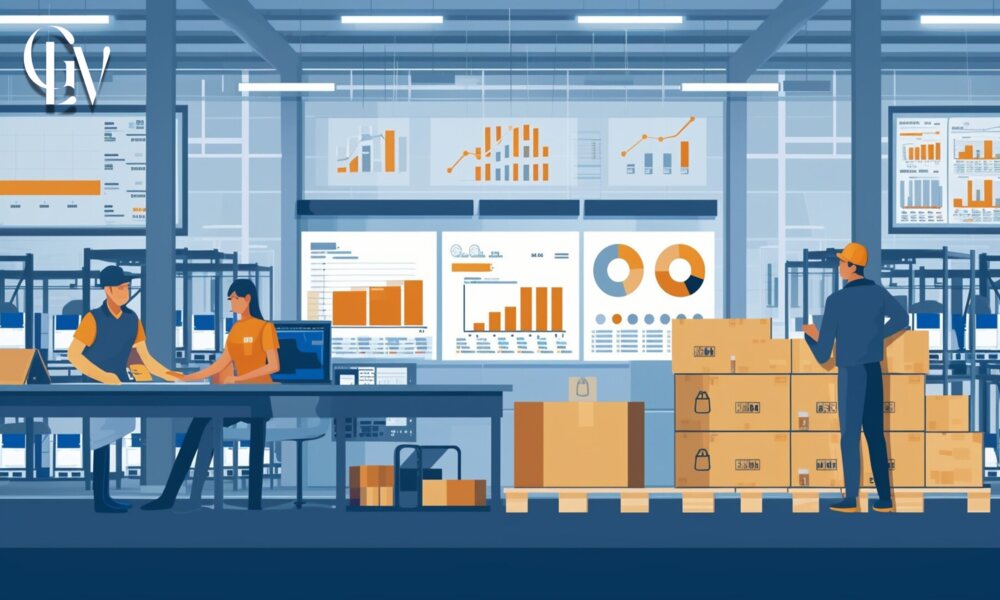
Recent data reveals a slowdown in U.S. manufacturing activity at the start of 2025. The S&P Global Flash U.S. Composite Purchasing Managers’ Index (PMI) dropped to 52.4 in January, down from 55.4 in December. This decline reflects a deceleration in economic activity, with significant implications for the manufacturing sector and the broader economy.
Key Factors Behind the Slowdown
Decline in New Orders: While there has been some growth in production, the pace of new orders has slowed, reflecting reduced demand in domestic and international markets.
Labor Market Adjustments: Employment in manufacturing is stabilizing, but companies are cautious about workforce expansions due to economic uncertainties.
Global Supply Chain Challenges: Persistent issues in the global supply chain, including shipping delays and raw material shortages, continue to impact production efficiency.
Inflationary Pressures: Rising input costs, including energy and raw materials, have squeezed profit margins, forcing manufacturers to reconsider pricing strategies.
Mixed Performance Across Sectors
While the manufacturing sector showed resilience with moderate production growth, the overall economic slowdown was driven by weaker performance in the services sector, which experienced its slowest expansion in nine months. This suggests a potential ripple effect on manufacturing, as services and production are interdependent.
The Road Ahead
Manufacturers are focusing on adaptability to navigate current challenges. Investments in automation, supply chain resilience, and workforce upskilling are gaining priority. Additionally, policy support from the government, including incentives for domestic production and infrastructure investments, may provide a much-needed boost.
Overview of the Slowing U.S. Manufacturing Activity
According to recent assessments, U.S. industrial activity has slowed as we move into 2025, which is indicative of supply chain modifications, technological advancements, and broader global economic trends. Although conventional production indicators indicate a slowdown, analysts speculate that as businesses adjust to new manufacturing technology and get ready for future expansion, this time may be a strategic pause for innovation.
Adopting Technologies for Advanced Manufacturing
Automation, robots, and AI-driven technologies are being rapidly integrated into the manufacturing sector despite the slowdown. Reduced operating expenses, predictive maintenance, and more accurate output are made possible by these technologies. Even in industries with lesser productivity, manufacturers are predicted to depend more and more on digital twins, AI analytics, and smart sensors by 2025 to streamline processes.
Modernization of the Supply Chain
One of the main causes of the slowdown has been supply chain interruptions. In order to build robust supply networks, forward-thinking firms are utilizing blockchain monitoring, AI-based demand forecasting, and IoT integration. In addition to lowering risk, this strategy puts businesses in a position to react quickly to changes in the market, paving the way for long-term growth in an industrial environment that is driven by the future.
Skills Development and Workforce Transformation
The future of American industry is human, not merely technology. To empower employees, businesses are spending money on collaborative robotics, AI-enhanced work tools, and reskilling initiatives. The industry is preparing a workforce that can manage complex operations while embracing innovation safely and effectively by fusing human expertise with intelligent systems.
Getting Ready for the Future of Smart Manufacturing
In the long run, the slowdown is viewed as a stage of transition toward a manufacturing environment that is more intelligent, sustainable, and digitally integrated. By implementing cutting-edge technology, updating supply chains, and encouraging human-AI cooperation, American firms can become more resilient, nimble, and better prepared to prosper in 2025 and beyond.
Global Leaders View
The slowdown in U.S. manufacturing activity serves as a reminder of the sector’s vulnerability to broader economic shifts. By addressing structural challenges and leveraging innovation, the manufacturing industry can remain a cornerstone of economic growth in 2025 and beyond.
Visit Latest Interviews












Leave a comment