





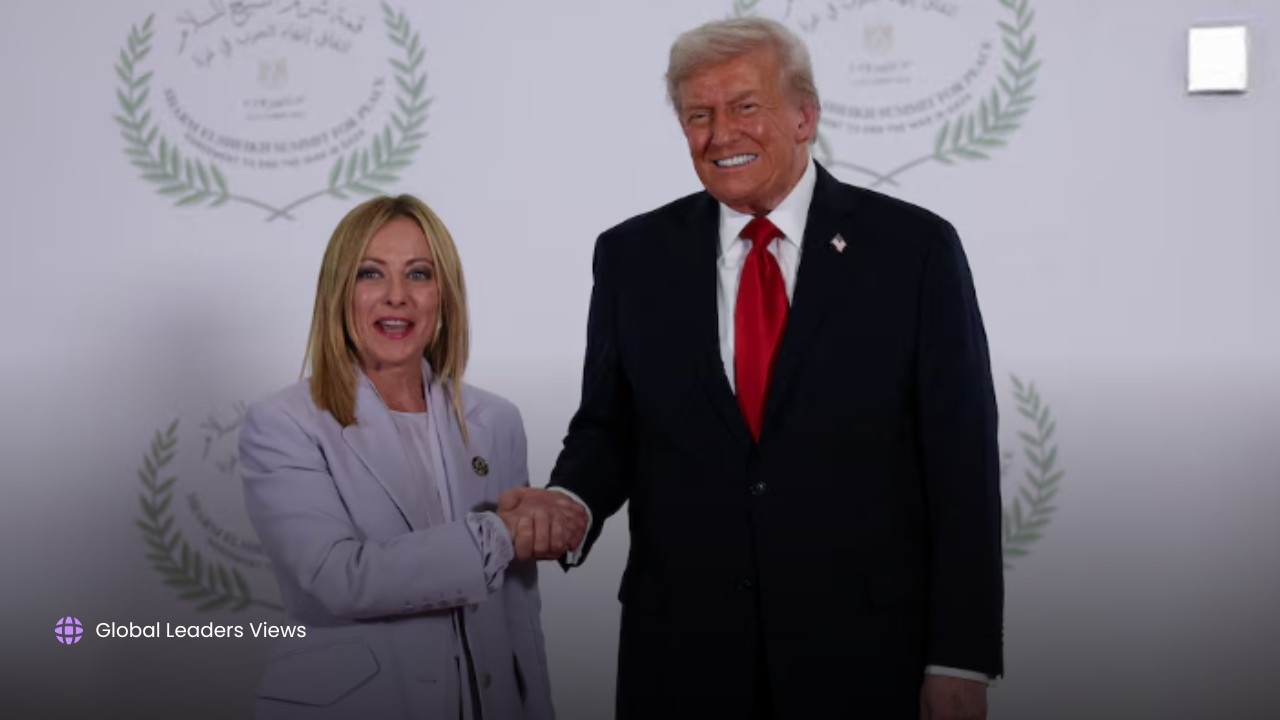
Former US President Donald Trump has voiced “shock” and obvious dissatisfaction with Italian Prime Minister Giorgia Meloni’s recent actions, marking a significant change in U.S.-Italy relations. The unanticipated tension has emerged during international discussions about the Iran War Disagreement, the Pope Leo XIV Dispute, energy vulnerabilities associated with the Strait of Hormuz and the energy crisis, and growing concerns about military cooperation following reports of Base Access Denied incidents. The most recent rift indicates a period of strategic uncertainty between two previously associated countries as geopolitical complexity increases in Europe and the Middle East.
An Abrupt End to U.S.-Italy Communication
Trump’s public response to Meloni’s diplomatic and political choices, characterizing them as “surprising” and “against shared expectations,” marked a turning point. This response, which has swiftly spread throughout international media, highlights the growing divide between the conservative leadership in Washington and the nationalist groups in Europe, which were before seen to be natural friends.
Meloni’s changing views on the Iran War disagreement and U.S.-Iran tensions are said to have set off Trump’s remarks. Italy has been pushing for diplomatic moderation while the United States continues to prepare for possible escalations with Tehran. This widening gap indicates a change in Italy’s foreign policy priorities and adds additional conflict to NATO’s strategic planning.
Tensions in the Strait of Hormuz Increase Energy Security Concerns
Growing instability in the Strait of Hormuz and Energy Corridor, a route vital to the world’s oil supply, exacerbates the issue. Analysts caution that Europe’s energy security may be at risk due to Italy’s reluctance to fully agree with American strategy.
Italy has been pushing Brussels to create an autonomous energy plan that is less dependent on Middle Eastern routes because of its heavy reliance on fuel imports. However, Trump views such actions as “uncooperative,” emphasizing that when the world’s energy markets are volatile, coordinated action is essential. Deeper ideological divisions about how Western countries should react to growing security threats in the region are reflected in the disagreement.
Visit: Latest Articles
Religious and Diplomatic Tensions: The Pope Leo XIV Conflict
The Pope Leo XIV Dispute is another unexpected factor fueling the conflict. Trump’s inner circle has been skeptical of Meloni’s attempts to arbitrate between Washington, Rome, and religious leaders, despite the Vatican’s continued non-aligned stance on U.S. interventionist policies.
A complex layer of stress has reportedly been created by debates over religious diplomacy, especially with regard to humanitarian commitments during international crises. For Italy, balancing the Vatican’s influence and national interests remains a delicate task. However, Meloni’s decisions don’t seem to fit Trump’s definition of “strong, decisive leadership.”
Military Cooperation at Risk: Issues with Base Access Denied
Claims pertaining to base access are contributing to the increasing conflict. Numerous situations in which Italy is accused of restricting or postponing specific types of collaboration involving American military soldiers in Europe. The impression alone has raised strategic concerns in Washington, even though Italian authorities deny any formal limits.
Italy is seen by the United States as a vital military base for operations in Europe, Africa, and the Middle East. Defense groups are rocked by any hint of diminished cooperation. According to Trump’s statement, he believes that these events are both unexpected and detrimental to long-standing bilateral confidence.
Visit: Latest Magazine
A Fresh Perspective on Western Geopolitics
A significant shift in Western geopolitics may be signaled by the widening gap between Trump and Meloni. Their once-aligned nationalist goals now seem to be diverging on a number of fronts, including Middle Eastern conflict plans, energy, military cooperation, and religious diplomacy.
As the U.S. strives for unified strategic alignment while Italy asserts a more independent geopolitical identity, political observers observe that this friction could change transatlantic communication. It is nonetheless evident that this disagreement has ushered in a new era in U.S.-European ties, one in which even long-standing friends may undergo unexpected strategic rifts.
Subscribe to Global Leaders Views and stay informed with the latest business, leadership, innovation, and industry insights shaping the world.













Leave a comment