





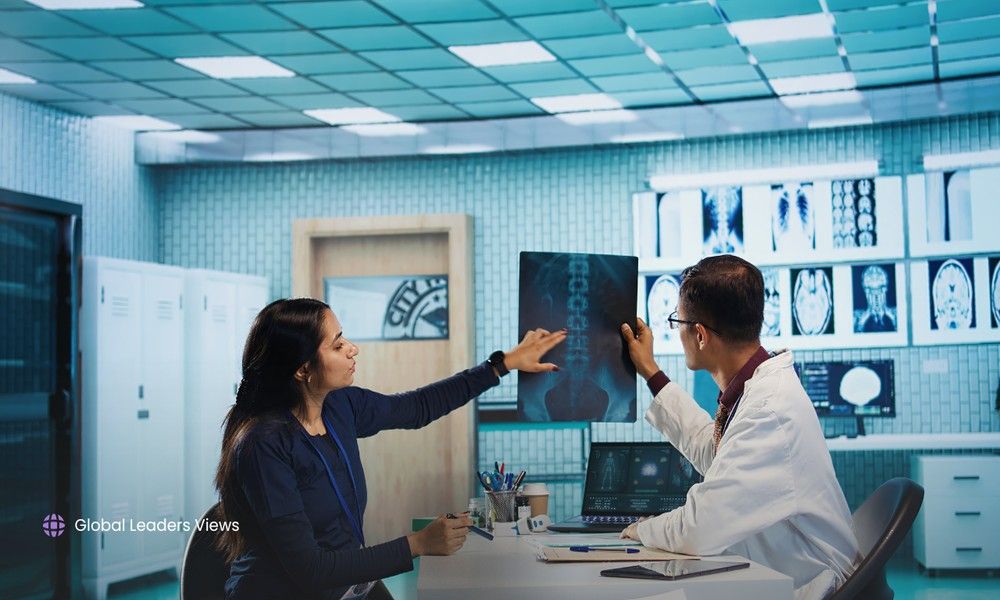
Spinal Repair at China Medical University Hospital (CMUH) and its scientific partners have introduced a novel tailored exosome platform for non-invasive spinal cord damage repair, marking a significant advancement in regenerative medicine. This novel approach, driven by improved therapeutic mechanisms, next-generation targeted technology, and robust clinical collaboration, establishes a new standard for neuro-repair therapies. CMUH’s discovery marks a turning point in the way the medical community tackles complex nerve regeneration as research worldwide picks up speed to fulfill the unmet requirements of spinal cord injury patients.
Targeting Technology: Accuracy Beyond Conventional Treatments
The key component of CMUH’s innovation is its targeted delivery system, which is designed to send exosomes straight to spinal tissue injury. This technique employs molecular “address labels” to direct therapeutic exosomes to the precise site of injury, in contrast to conventional approaches that rely on systemic treatments with limited precision.
This degree of precision reduces the possibility of inflammation, undesired cell activation, or off-target consequences while significantly increasing therapy efficacy. CMUH’s discovery is in perfect harmony with the global movement toward intelligent, bio-responsive medical systems as interest in precision therapies grows.
The mechanism and effectiveness of the platform’s spinal cord repair
The platform uses exosomes, which are microscopic extracellular vesicles that cells normally release, to transport genetic signals, growth factors, and regenerative chemicals that support brain regeneration. They have a distinct advantage over conventional cell-based treatments due to their tiny size, inherent biocompatibility, and capacity to pass through biological barriers.
Promising results are shown by early preclinical research carried out by CMUH and its partners:
- Enhanced neuronal transmission between damaged areas
- Decreased scar development and inflammation
- Improved regeneration of axons
- Quicker recovery of sensory abilities and mobility
The therapy enhances the spinal cord’s inherent ability to self-repair, which was previously believed to be incredibly limited, by employing biological signals that replicate the body’s own healing pathways.
Clinical Use: A Future of Non-Invasive Spinal Repair
The non-invasive delivery mechanism of CMUH’s platform is one of its biggest features. Conventional spinal cord therapy frequently entails high-risk procedures, stem cell injections, or surgery. Because CMUH’s exosome therapy is intended to be provided by injection-free or minimally invasive methods, it is safer and more accessible for a larger range of patients.
Among the possible clinical uses are:
- Recovery from spinal cord injuries following trauma
- Disorders of the degenerative spine
- Damage to peripheral nerves
- Conditions involving neuro-inflammation
- Healing of the spine after surgery
The ease of administration could also allow more hospitals worldwide to adopt the therapy without requiring specialized equipment or highly complex surgical setups.
Focus on Neuro-Repair: Moving Towards a New Era of Regeneration
The work of CMUH represents a global trend toward next-generation neuro-repair, where molecular therapy, biological engineering, and AI-driven modeling come together. Eventually, the platform might incorporate AI-guided analytics to track response in real time, forecast recovery paths, and customize therapy dosages.
Patient outcomes could be completely changed by this technology, especially for those who previously had little chance of making a significant recovery. The platform may be the basis for a wider range of neuro-regenerative therapies as research advances.
Cooperation & Guidance: An International Collaboration for Recovery
The robust collaborative environment at CMUH, which includes researchers in regenerative medicine, biotech businesses, and universities, is responsible for this success. Their shared goal of helping patients with spinal cord injuries regain their movement, function, and independence emphasizes the value of interdisciplinary cooperation in contemporary healthcare innovation.
CMUH is becoming a world leader in non-invasive neuro-repair technology by bringing together specialists in biotechnology, neurology, molecular engineering, and clinical science. As the study moves forward toward larger clinical trials and possible regulatory avenues, the medical world is keeping a careful eye on it.
Read our latest Article
A Revolution in the Field of Next-Generation Spinal Healing
More than just a technical accomplishment, the introduction of CMUH’s targeted exosome platform portends a time when a person’s life may no longer be defined by spinal cord damage. With its non-invasive architecture, regenerative power, and sophisticated targeting, CMUH is opening the door to a future in which healing is not only feasible but completely attainable.
Read our Exclusive interview with Karimah Hudda
- Pam Northrup: The Visionary Leadership Reshaping the Future of Education
- Dr. Maxim Behar: Building the Future of Communications Through Trust, Innovation, and Human Connection
- Darren Crouch: Redefining Legacy Through Sustainable Innovation and the Future of Green Funerals
- Jessica Dandridge-Smith: Building Stronger Communities Through Climate Leadership
- Global Leaders Views: A Global Business Magazine for Leaders and Visionaries
Global Leaders Views brings together the stories, leaders, and ideas shaping the future of business.















Leave a comment