

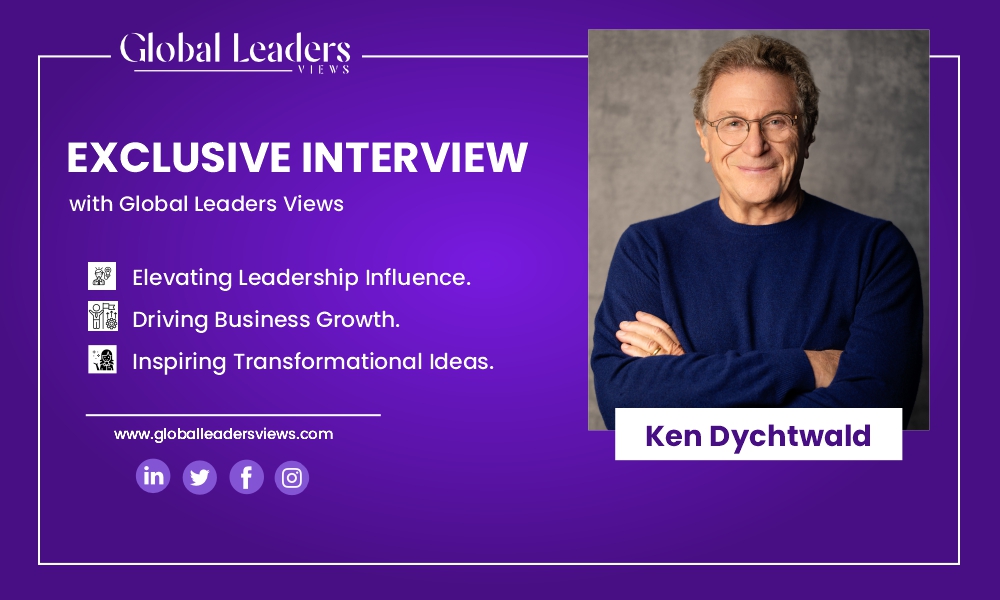
Ken Dychtwald, Ph.D., a pioneering psychologist, gerontologist, bestselling author, and global thought leader, has spent more than 50 years shedding light on what he refers to as the “Age Wave,” a potent demographic shift that is transforming societies, economies, and human potential on an unprecedented scale. In a time when youth-centric narratives dominate culture, business, and media, one voice has consistently challenged the norm and reshaped the global conversation.
As the cover face of “Top 10 High-Impact Speakers Driving Growth & Leadership in 2026,” Dychtwald stands not merely as a speaker but as a movement architect, guiding leaders, organizations, and individuals toward a future where longevity is not a burden but a profound opportunity.
What Thought Leadership Really Means in Today’s World

Thought leadership is often misunderstood as visibility or popularity. In reality, it is about bringing clarity to complexity and direction to uncertainty. It is about identifying what others overlook and having the courage to publicly speak about it before it becomes obvious. Dychtwald’s work perfectly reflects this.
Early in his career, when the world was largely focused on youth, growth, and immediate economic expansion, Dychtwald recognized a silent but powerful shift taking place—the global population was living longer and longer. While others saw aging as a problem, he saw increasing longevity as a transformational opportunity. This ability to be visionary and see ahead of the curve is what separates ordinary professionals from true thought leaders.
Thought leadership, at its core, is about anticipating change, identifying stumbling blocks and possibilities, and helping leaders prepare for it. It requires a balance of insight, research, communication, resilience, and emotional intelligence. Dychtwald’s career demonstrates that it is not about being the loudest voice in the room but about being a change agent in the most meaningful way.
The Role of Curiosity in Building Thought Leadership
One of the most powerful lessons from Dychtwald’s journey is the importance of curiosity. In a world where many people settle into routines and predictable patterns, curiosity keeps leaders prescient, adaptable, and relevant.
Dychtwald often emphasizes that curiosity is what drives innovation. It pushes individuals to ask better questions, explore unfamiliar ideas, and challenge existing beliefs. Without curiosity, thought leadership becomes stagnant. With it, it becomes limitless.
His own life reflects this principle. From studying the connection between mind and body at the Esalen Institute to exploring global aging trends, Dychtwald has continuously followed his curiosity into new territories. This mindset has allowed him to stay ahead in a field that is constantly evolving.
Communication: The Heart of Thought Leadership
Having a great idea is only the beginning. The real challenge lies in communicating that idea in a way that resonates with people. Dychtwald understands this deeply, and it is one of the reasons his influence spans across industries and continents.
In today’s digital age, communication is no longer confined to books or lectures. It happens through podcasts, webinars, social media, and live events. A thought leader must be able to adapt their message to different formats while maintaining clarity and impact.
Dychtwald has spent decades refining his communication skills. He has worked with coaches, studied storytelling techniques, and continuously seeks to improve his ability to connect with audiences. His speeches are not just informative; they personally connect with audiences by being engaging, emotional, and memorable.
This highlights an important truth: thought leadership is not just about what you say but also how you say it.
Credibility: The Foundation of Influence
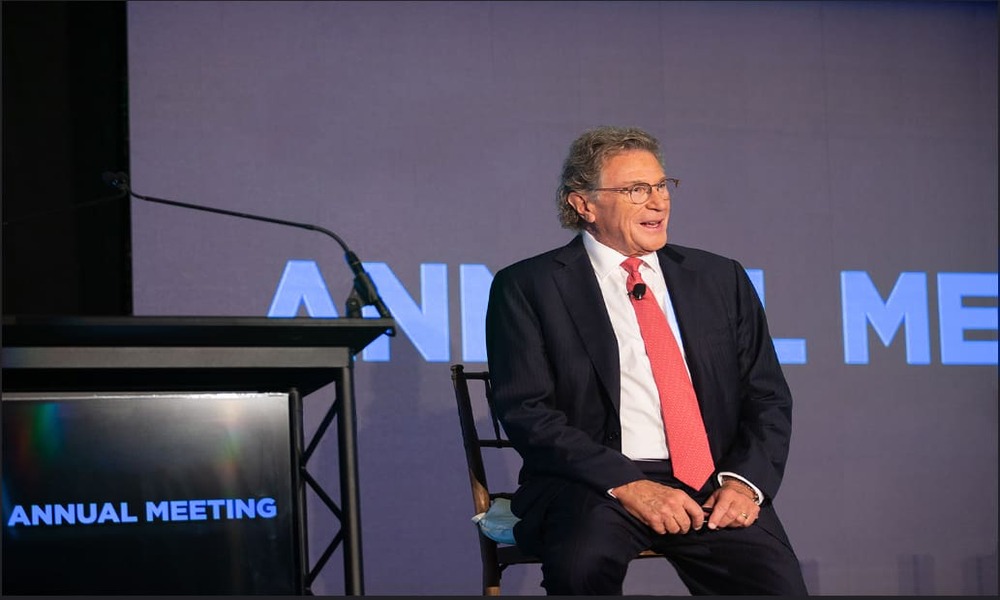
In a world filled with information, credibility has become more important than ever. People are constantly exposed to opinions, data, and content, but they only trust those who demonstrate consistency, accuracy, and depth.
Dychtwald’s work is built on a strong foundation of research and real-world experience.
Whether he is advising global corporations or addressing policymakers, his insights are backed by data, analysis, and decades of expertise.
This commitment to credibility has earned him the trust of leaders across sectors, from business executives to US presidents. It reinforces the idea that thought leadership is not about opinions; it is about informed perspectives that stand the test of time.
Facing Resistance: A Necessary Part of Leadership
Every meaningful idea faces resistance at some point. This is especially true for thought leaders who challenge existing norms and introduce new ways of thinking.
When Dychtwald introduced the concept of “healthy aging” decades before it became popularized, it was not immediately accepted. Many people misunderstood the idea and questioned its implications. But instead of stepping back, he stayed committed to his vision.
Over time, the concept gained acceptance and is now widely used around the world. This journey highlights an essential aspect of thought leadership: the ability to stay resilient in the face of criticism.
True leaders understand that resistance is not a sign of failure; it is often a sign that the idea is ahead of its time.
Balancing Vision with Real-World Impact
One of the biggest challenges in thought leadership is turning ideas into action. It is easy to talk about the future, but much harder to create practical solutions that people can implement.
Dychtwald has mastered this balance. Through his work with Age Wave, the company he founded forty years ago, he has helped organizations understand how aging populations will impact their strategies, products, and services. His insights are not just theoretical; they are practical, actionable, and results-driven.
This ability to connect vision with execution is what makes thought leadership truly valuable. It ensures that ideas do not remain abstract but instead lead to real change.
The Importance of Mentorship and Continuous Learning
No thought leader reaches success alone. Behind every great leader is a network of mentors, advisors, and collaborators who provide guidance and support.
Dychtwald has consistently emphasized the importance of mentorship in his journey. He has learned from some of the most influential figures in his field as well as other fields and has, in turn, mentored countless others.
This exchange of knowledge creates a cycle of growth and development. It ensures that ideas continue to evolve and that new leaders are prepared to take the conversation forward.
In addition to mentorship, Dychtwald believes in continuous learning. Even after decades of success, he remains open to new ideas, technologies, and perspectives. This willingness to learn is what keeps thought leaders relevant in a changing world.
Adapting to a Rapidly Changing World
The pace of change today is faster than ever before. Technologies evolve, industries transform, and global challenges emerge with increasing frequency. In such an environment, adaptability is not just an advantage; it is a necessity.
Dychtwald has navigated these changes by staying flexible and forward-thinking. He has embraced new communication platforms, integrated emerging trends into his work, and continuously updated his approach to thought leadership.
This adaptability is a key lesson for anyone aspiring to become a thought leader. It is not enough to have a great idea; you must also be able to evolve with the world around you.
A New Perspective on Life, Work, and Leadership
At the core of Dychtwald’s work is a powerful message: life does not follow a single path. In a world where people are living longer, the traditional definitions of career, retirement, and success are changing.
Thought leadership, in this context, is about helping people reimagine their possibilities. It is about showing that growth, learning, and achievement are not limited by age or circumstance.
Dychtwald’s insights encourage individuals to think differently about their futures. They inspire organizations to adapt to new realities. And they challenge society to embrace a more inclusive and forward-looking perspective about longevity.
Conclusion: The True Essence of Thought Leadership
In closing, Ken Dychtwald’s journey reminds us that thought leadership is not built in isolation; it is sustained through people, perspective, and grounding. As his experiences reveal, the path of influence is not without setbacks. There are moments of doubt, criticism, and even personal setbacks that can test one’s resolve. That is why he emphasizes the importance of surrounding yourself with a strong support system, whether it is family, trusted colleagues, mentors, or a close-knit community. These are the individuals who provide strength when the journey becomes difficult and clarity when the path seems uncertain.
At the same time, Dychtwald offers a candid reflection on success itself. Recognition and influence, while rewarding, can sometimes create a disconnect from reality. He cautions against losing perspective, noting that true leaders remain grounded, self-aware, and open to honest feedback as well as change. The presence of people who are willing to challenge, guide, and keep you aligned with your purpose becomes invaluable.
Ultimately, his message is both powerful and practical: to lead effectively, you must stay connected to your mission, to your values, and to the people who keep you grounded. Because in the end, thought leadership is not just about shaping ideas; it is about staying human while striving to change the world.



Leave a comment