

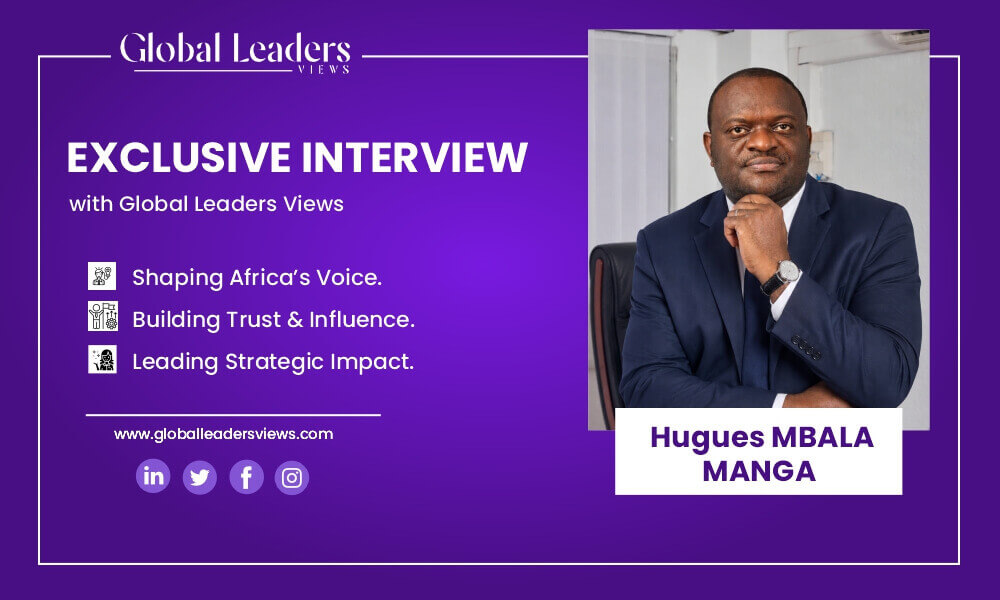
In Africa’s rapidly evolving corporate landscape, communication has become far more than a business function. It is now deeply connected to trust, public perception, stakeholder diplomacy, and long-term organizational sustainability. Few professionals understand this transformation as profoundly as Hugues MBALA MANGA, Head of Communications & CSR at CAMRAIL, a subsidiary of Africa Global Logistics.
Over the years, Hugues has built a distinguished career across some of Africa’s most strategic sectors, including aviation, energy, and rail transport. His professional journey reflects not only a deep understanding of communication strategy but also a strong belief that organizations must remain socially responsible, transparent, and genuinely connected to the communities they serve.
Today, his leadership stands at the intersection of corporate reputation, stakeholder engagement, and sustainable social impact, making him one of the most respected communications and corporate affairs leaders shaping Africa’s business environment.
A Journey Rooted in Purpose and Passion
For Hugues, communication was never simply a career choice. It was a calling that developed naturally through his early experiences and personal interests. Long before entering the corporate world, he was already drawn to public speaking, storytelling, and leadership. During his years at Collège de la Retraite, he served as vice-president and later president of the school radio club, acted as spokesperson for the UNESCO club, and participated actively in organizing youth events.
Those early experiences planted the seeds of a future dedicated to influence, dialogue, and human connection.
His academic journey further refined that passion. Hugues attended the Advanced School of Mass Communication (ASMAC), where he earned a bachelor’s degree in advertising. He later pursued a master’s degree in advertising semiotics at the University of Yaoundé I, deepening his understanding of narratives, symbolism, and perception.
This combination of intuition, intellectual curiosity, and professional discipline became the foundation of his leadership philosophy.
“I realized very early that communication is not simply about making organizations visible,” he explains. “It is about helping them remain credible, useful, and trusted in environments where expectations are high and realities are complex.”
Learning Leadership Through Strategic Industries
Hugues began his professional career in the aviation sector with Camair-Co, where he discovered the true weight of communication in industries exposed to constant public scrutiny. In aviation, communication is inseparable from trust, reliability, and institutional credibility. Every message carries operational and reputational consequences.
This experience gave him a practical understanding of how communication can stabilize organizations during sensitive situations while strengthening public confidence.
His transition to Nachtigal Hydro Power Company marked another significant milestone. Working within one of Central Africa’s largest infrastructure and energy projects exposed him to highly complex stakeholder ecosystems involving governments, international institutions, local communities, development agencies, and investors.
The experience sharpened his ability to navigate political sensitivities, social expectations, and strategic communication challenges in environments where infrastructure projects directly influence national development.
Across aviation, energy, and transport sectors, Hugues progressively evolved from operational communication responsibilities into broader strategic leadership roles. These industries shaped his belief that communication must always remain connected to operational realities and human impact.
“In sectors such as rail, energy, or aviation, communication cannot simply focus on image-building,” he says. “People expect transparency, reliability, and tangible impact because these industries affect daily life and economic development.”
Leading Communication and CSR at CAMRAIL
Today, as Head of Communications & CSR at CAMRAIL, Hugues leads communication strategies within one of the region’s most strategic transport companies. His role extends far beyond media visibility or corporate messaging. It involves protecting institutional trust, strengthening stakeholder relationships, supporting organizational transformation, and driving meaningful social initiatives.
One of his core priorities is ensuring alignment between corporate messaging and operational reality.
“Reputation is built when communication reflects what people actually experience,” he explains. “Consistency between words, actions, and values is essential.”
This philosophy has guided his approach to stakeholder engagement across public institutions, local communities, customers, employees, and strategic partners. He believes communication leaders must prioritize listening just as much as messaging.
Internal communication also occupies a central place in his strategy. For Hugues, employees are not only members of an organization but also its first ambassadors. Building trust internally directly influences external reputation.
At the same time, his leadership in corporate social responsibility reflects a deep commitment to sustainable development and community impact. Rather than treating CSR as a symbolic exercise, he advocates for initiatives that remain closely connected to business operations and local realities.
Communication with Human Impact
Among the initiatives that best represent Hugues’ philosophy is CAMRAIL’s rail safety awareness program developed for schools and communities living near railway lines.
In many parts of Africa, railway environments remain vulnerable to risky behaviors due to limited public awareness. Through educational outreach programs, school campaigns, and direct community engagement, CAMRAIL sought to improve understanding of rail safety while strengthening trust with surrounding populations.
For Hugues, the significance of the initiative went beyond corporate communication.
“It addressed a real social issue while creating meaningful relationships between the company and local communities,” he says. “The most impactful communication initiatives are those that combine operational relevance with genuine human value.”
This belief perfectly captures his broader vision of responsible leadership — one where organizations contribute not only to economic growth but also to social progress and long-term community trust.
The New Era of African Corporate Communication
As Africa’s business environment becomes increasingly connected, digital, and globally visible, Hugues believes communication leaders must evolve accordingly.
In his view, authenticity, agility, and cultural intelligence now define effective corporate communication across the continent.
African audiences have become more informed and more sensitive to inconsistency. Stakeholders no longer evaluate organizations solely through official statements or advertising campaigns. Instead, they compare messages with actions, employee experiences, customer feedback, and visible corporate behavior.
“People quickly recognize communication that feels artificial or disconnected from reality,” Hugues notes. “Organizations therefore need to communicate with more transparency and humanity.”
He also emphasizes the growing importance of adaptability. Africa’s diversity requires communication leaders to understand different cultural contexts, social realities, and audience expectations. A strategy effective in one environment may fail entirely in another.
For Hugues, successful communication in multicultural environments begins with listening.
“Every environment has its own codes, references, and perceptions,” he explains. “Understanding these nuances is essential before designing communication strategies.”
Navigating Crisis and Complexity
In today’s digital age, communication leaders increasingly operate under pressure. Social media, public scrutiny, and rapid information cycles have transformed how organizations manage crises and protect reputation.
Hugues approaches high-pressure communication situations with calmness, precision, and coordination.
“The first responsibility during a crisis is to create clarity, not confusion,” he explains.
While speed is important, he believes accuracy matters even more. Stakeholders may accept difficult realities when organizations communicate honestly, transparently, and responsibly.
He also emphasizes that crisis communication cannot function in isolation. Effective responses require close collaboration between communication teams, leadership, legal departments, operational units, and stakeholders to maintain consistency and credibility.
His approach reflects a broader leadership mindset rooted in accountability, trust preservation, and long-term reputation management.
The Strategic Future of Communications Leadership in Africa
Looking ahead, Hugues believes the role of communications and corporate affairs leaders in Africa will continue to expand strategically.
Communication professionals are no longer limited to media relations or public visibility. Increasingly, they contribute directly to business growth, ESG positioning, stakeholder diplomacy, organizational transformation, and crisis resilience.
The rise of digital transformation, geopolitical complexity, and growing public expectations will require future communication leaders to become even more agile, internationally minded, and data-driven.
At the same time, Hugues sees enormous potential for African communication professionals to influence how the continent is perceived globally.
“Africa has extraordinary talent, creativity, and strategic insight,” he says. “Communication leaders from the continent have an important role to play in shaping global narratives about Africa’s future.”
Leadership Built on Authenticity and Trust
Throughout his journey, one principle has remained constant for Hugues MBALA MANGA: communication must serve people before perception.
He believes authenticity and transparency are no longer optional in modern leadership. Organizations that communicate openly, acknowledge challenges honestly, and demonstrate genuine accountability are the ones that build durable trust.
This philosophy extends internally as well. Employees increasingly expect alignment between corporate values and organizational behavior. Honest communication fosters engagement because people feel respected, informed, and included.
For Hugues, sustainable influence is never built through polished narratives alone. It is earned through clarity, consistency, and meaningful action.
A Vision Beyond Corporate Success
As he reflects on the future, Hugues remains focused on creating long-term impact that goes beyond business performance.
His vision is to help organizations operating across Africa become not only commercially successful but also trusted, influential, and socially meaningful.
More personally, he hopes his journey contributes to elevating the international perception of African communications leadership. He believes the continent possesses a powerful generation of strategic thinkers capable of shaping conversations on a global scale.
Through his leadership at CAMRAIL and his broader professional mission, Hugues MBALA MANGA continues to demonstrate that communication, when guided by responsibility and authenticity, can become one of the strongest drivers of trust, transformation, and sustainable development in Africa.


Leave a comment