





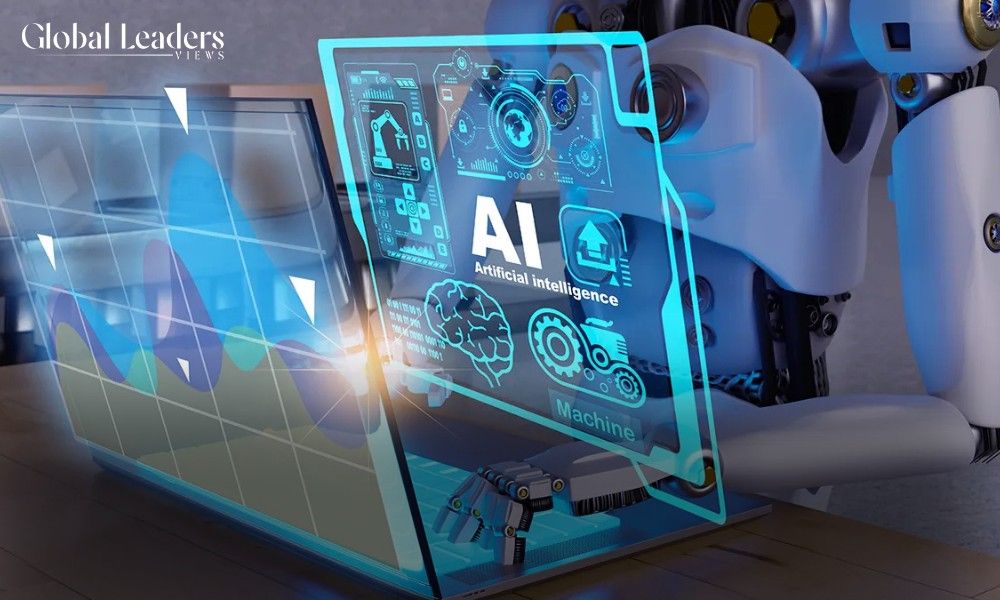
Global Leaders Views explores how artificial intelligence (AI) and robotics are reshaping the modern workplace, helping businesses improve productivity, accuracy, and operational efficiency. From manufacturing floors to warehouses, hospitals, and offices, AI-powered robots are taking on repetitive tasks and supporting employees in more complex activities. These technologies combine intelligent software, sensors, cameras, and mechanical systems to perform tasks with greater flexibility. As businesses adapt to changing workforce needs and growing competition, AI-powered robotics is becoming an important part of workplace innovation.
How AI and Robotics Are Changing the World
AI and robotics are changing how people work, communicate, and solve problems. Traditional robots usually follow predefined instructions, while AI-powered systems can analyze information, recognize patterns, and adjust their actions based on their surroundings.
For example, robots can help organize warehouse inventory, inspect products, move materials, and support healthcare professionals. In offices, AI tools can assist with document processing, data analysis, and routine administrative work.
The key difference is that AI helps robots make sense of information, while robotics allows them to interact with the physical world. Together, these technologies are creating new opportunities for businesses across industries.
How AI-Powered Robots Are Transforming Manufacturing
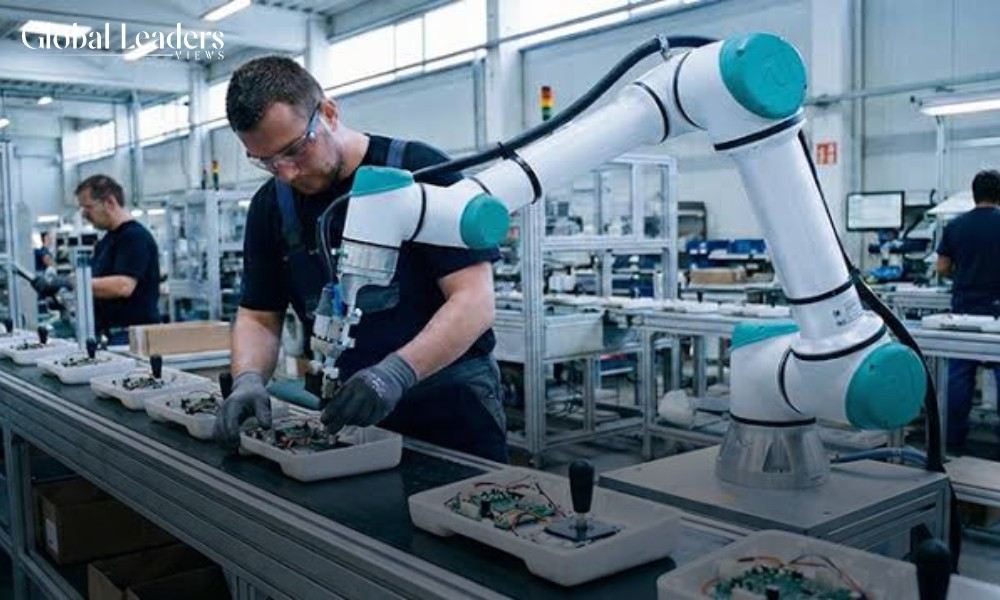
Manufacturing is one of the major industries benefiting from AI-powered robotics. Smart robots can assemble products, inspect components, handle materials, and identify potential defects during production.
AI-powered vision systems help machines recognize objects and detect quality problems. Predictive maintenance systems can also analyze equipment data to identify signs of possible failure before a breakdown occurs.
These capabilities can reduce production delays, improve consistency, and minimize material waste. Human workers remain important for supervision, problem-solving, quality decisions, and tasks that require judgment.
AI-powered robots are helping manufacturers move from fixed automation toward more flexible and data-driven production systems.
How AI Robots Work and How They Are Made
AI robots combine several technologies to perform tasks. Their physical structure includes motors, mechanical components, sensors, and control systems. Cameras and other sensors collect information about the environment, while onboard computers or connected systems process that information.
AI models analyze the collected data and help the robot identify objects, plan movements, or select an appropriate response. Control software then translates those decisions into physical actions.
Building an AI robot involves designing its mechanical structure, selecting suitable sensors and hardware, developing software, training or configuring AI models, and testing the system in real-world conditions. Safety checks and ongoing maintenance are essential before deployment.
The exact process depends on the robot’s purpose, complexity, and working environment.
Can AI-Powered Robots Repair Other Robots?
Researchers and technology companies are exploring robotic systems that can inspect equipment, identify faults, and assist with maintenance. The idea that AI-powered robots can now autonomously repair other bots reflects an emerging direction in robotics rather than a capability available across all systems.
Some automated systems can detect mechanical problems or replace components in controlled environments. However, complex repairs still require human technicians, specialized equipment, and careful safety checks.
These developments could eventually help businesses reduce downtime and maintain equipment more efficiently.
Are Robots Replacing Humans in the Workplace?
The growth of AI robotics has raised concerns about job security. Robots can replace certain repetitive, physically demanding, or predictable tasks, particularly in manufacturing and logistics. However, automation can also create demand for new roles in robotics maintenance, programming, engineering, and system management.
The idea of AI robots assuming control over entire workplaces does not reflect how most businesses currently use these technologies. Human oversight, clear operating rules, and safety measures remain essential.
Organizations can prepare employees for these changes through training, reskilling, and opportunities to work alongside automated systems.
AI-Powered Robots: Shaping the Future of Work
AI-powered robots are changing the modern workplace by improving efficiency, supporting safer operations, and helping businesses manage complex tasks. Although automation will reshape some jobs, its broader impact will depend on how organizations introduce these systems and support their employees.
The future of work will not be defined by technology alone, but by how effectively people and intelligent machines work together. Businesses that balance innovation with responsible implementation and workforce development will be better positioned to adapt to the next stage of industrial transformation.













Leave a comment